Photography - Aurora
Chasing the Aurora Over Rovaniemi
Most people picture aurora photography as pointing a camera at the sky and pressing a button. In practice, the shot is the last ten minutes of a night that starts hours earlier — checking the Kp index, watching cloud cover roll in from the west, and picking a spot with a clean horizon before the sky does anything at all. Everything before the shutter clicks is the actual work. This is what a night of aurora hunting in Finnish Lapland actually looks like, from planning to frame.
Reading the Sky Before You Shoot
Aurora forecasting isn't guesswork if you know what to check. The Kp index — a scale from 0 to 9 measuring geomagnetic activity — is the first number worth watching, but it's a blunt instrument on its own. A Kp of 3 with clear skies over Rovaniemi will outperform a Kp of 6 buried under cloud. Solar wind speed and the interplanetary magnetic field's orientation (Bz) matter just as much, and apps built specifically for aurora tracking give a clearer picture than the Kp number alone.
Cloud cover is the real variable that decides whether a night is worth leaving the house for. Finnish Lapland's weather shifts fast, and a forecast that looked clear at sunset can be socked in by 11pm. Checking hour-by-hour cloud maps, not just a daily forecast, is the difference between a wasted drive and a working night.
Where to Stand: Scouting a Horizon
A technically strong aurora photograph and a forgettable one usually come down to the same thing: what's in front of the lights, not the lights themselves. A clean, low horizon free of stray light pollution matters more than most people expect — even distant town glow along the northern skyline will wash out a faint display before it has a chance to show.
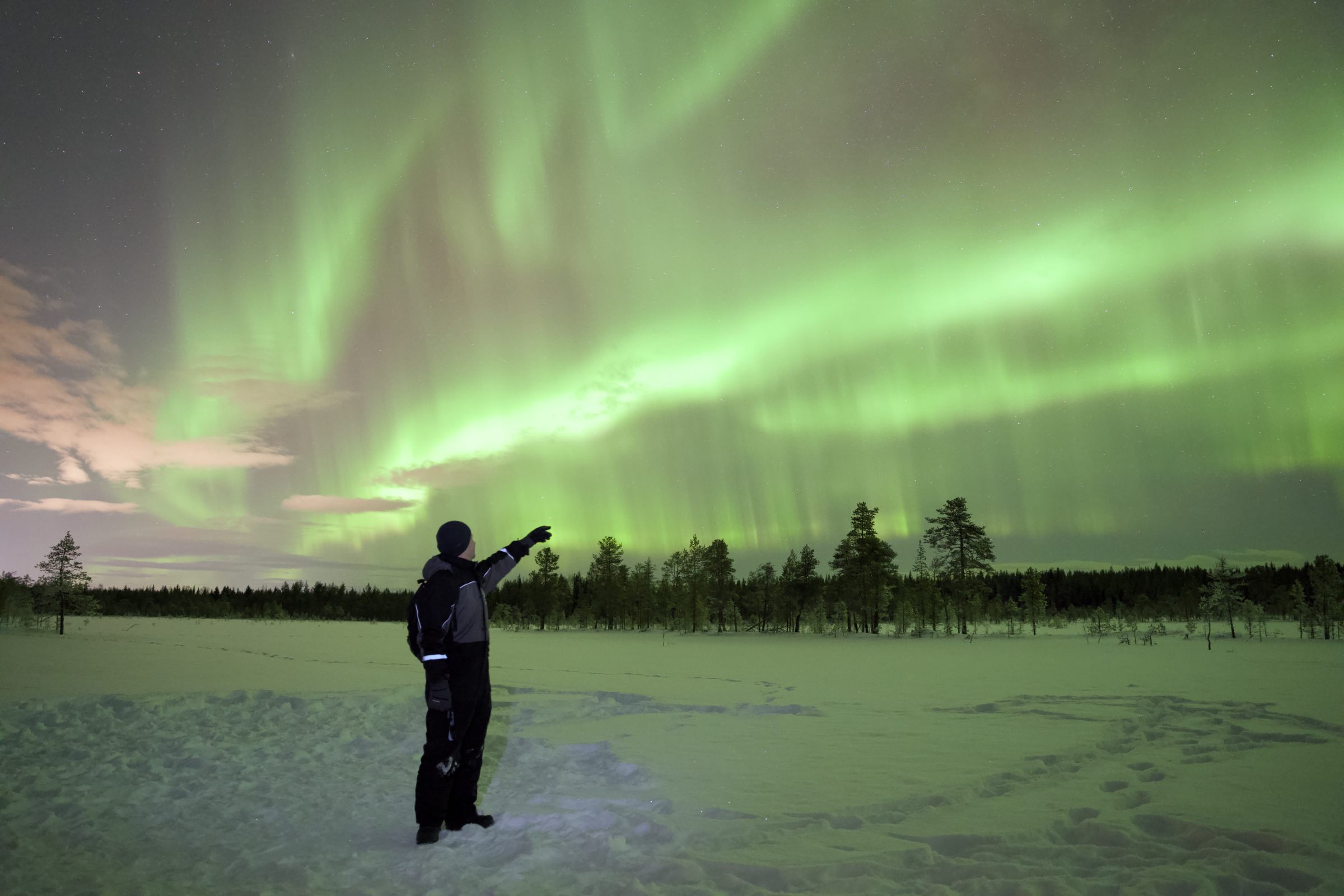
Around Rovaniemi, the Ounasjoki riverbank and the open fell areas outside town give that unobstructed sightline. But an empty horizon isn't enough on its own — a shot needs an anchor. A treeline, a frozen lake's edge, a single cabin with a lit window, even a person standing still in the frame gives the eye somewhere to land before it travels up into the color. Scouting these spots in daylight, well before the display starts, saves a lot of fumbling around in the dark later.
Camera Settings That Actually Matter
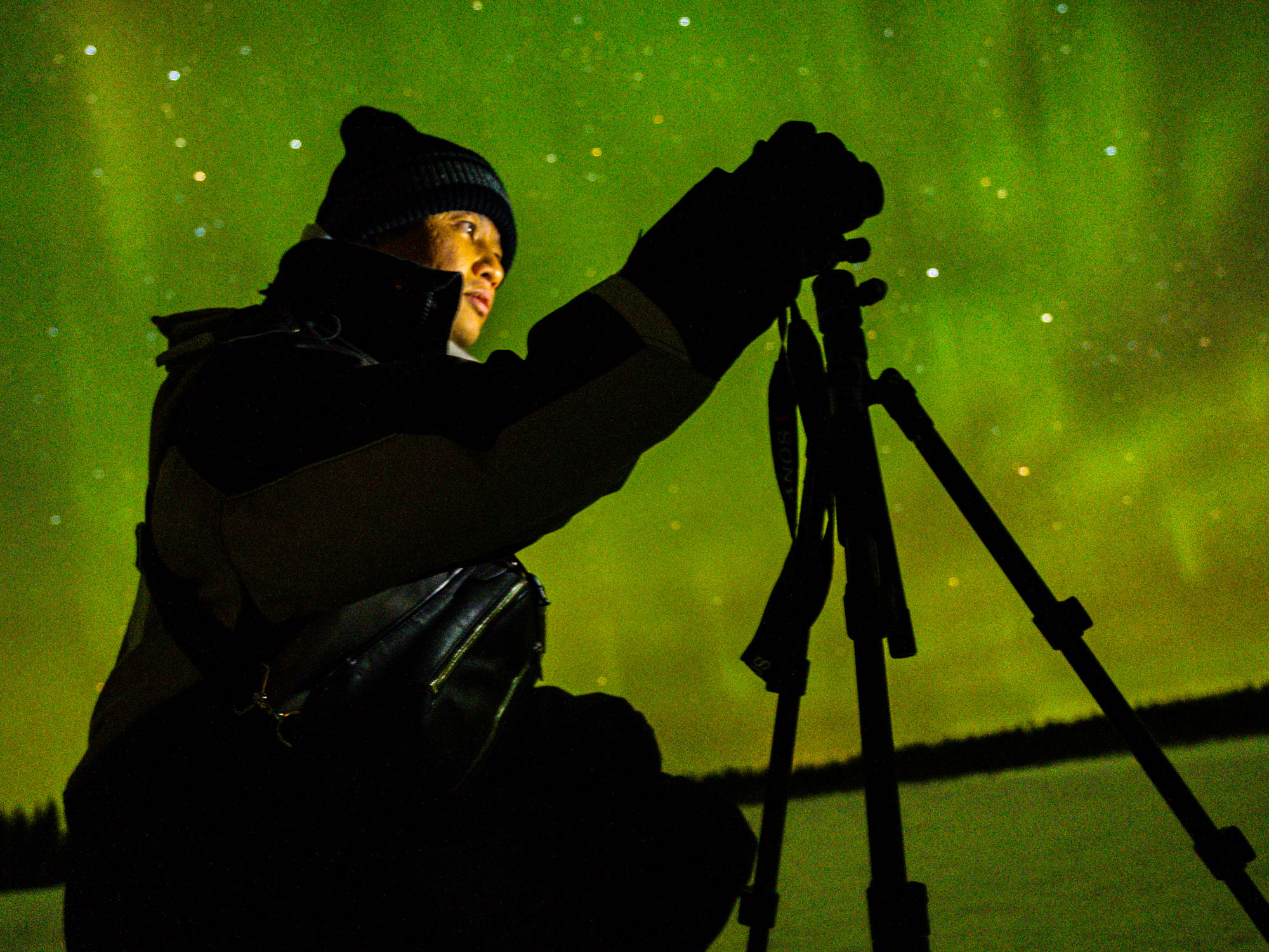
Aurora photography rewards a manual approach — auto modes consistently underexpose the sky and hunt for focus in the dark. A wide aperture, ideally f/1.8 to f/2.8, lets in enough light without forcing the ISO too high. ISO itself sits in a working range of roughly 800 to 3200 depending on the camera and how bright the display is; push much higher and noise starts eating into the color detail that makes an aurora photograph worth looking at.
Shutter speed is where the real judgment call happens. A slow-moving, diffuse glow tolerates 8 to 15 seconds without losing shape. A fast, rippling display — the kind that visibly dances rather than glows — needs something closer to 2 to 5 seconds, or the movement blurs into a flat wash of green. Manual focus set to infinity, locked before the sky gets properly dark, and a sturdy tripod are non-negotiable; nothing ruins a long exposure faster than a soft image or a shake from an unstable base.
Why Faint Arcs Beat Bright Explosions
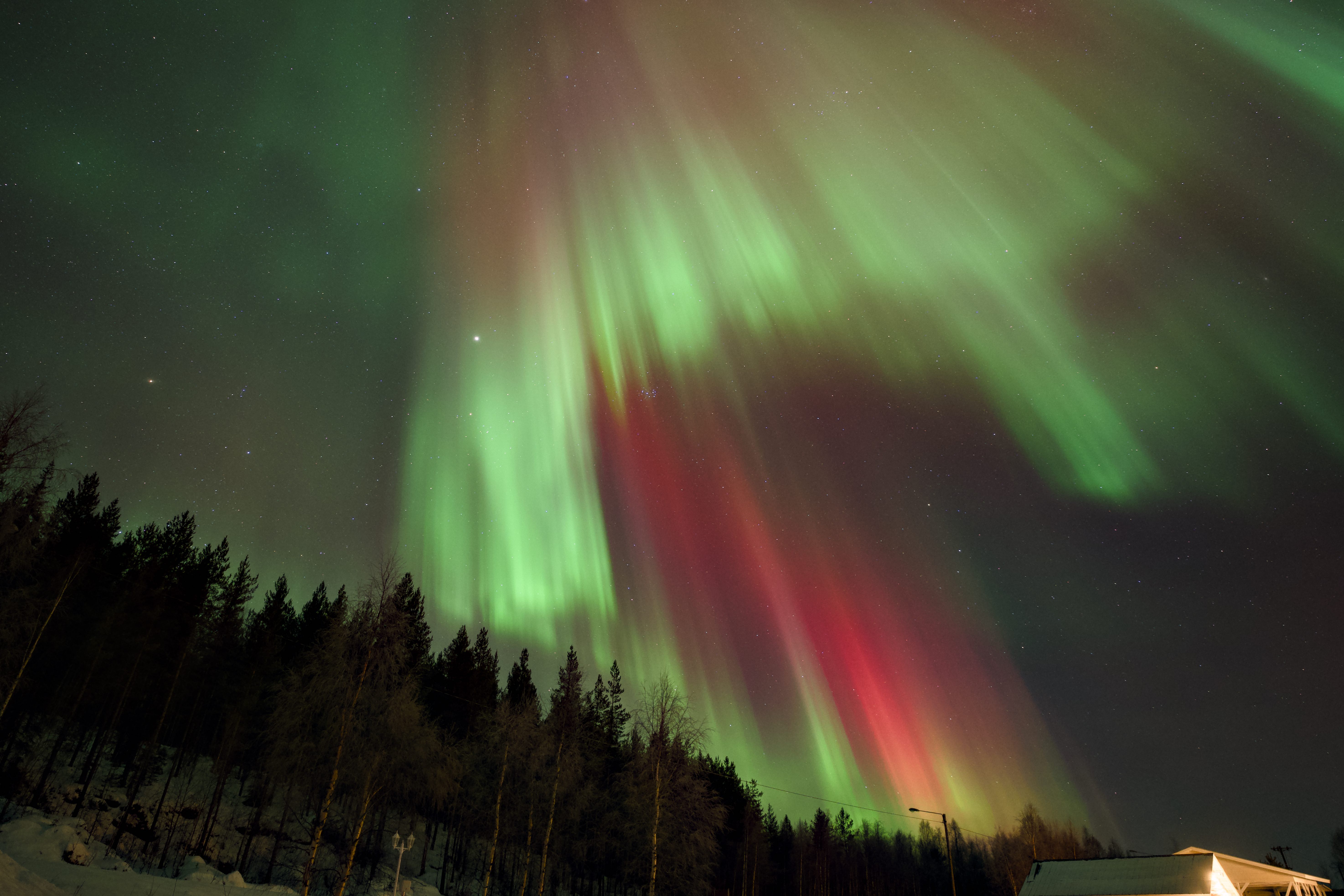
The best frames rarely come from the brightest displays. A faint green arc low on the horizon, with something solid in the foreground to hold the eye, often reads stronger in a final image than a full sky ablaze with no anchor. A dramatic display photographs dramatically for about ninety seconds, and then it's just a green sky — texture, structure, and a sense of scale carry a photograph much further than raw intensity does.
Cold Weather Practicalities
None of the above matters if the gear stops working. Cold drains batteries fast — carry spares in an inside pocket, close to body heat, and swap them out before the current one dies rather than after. Bringing a camera from cold air into a warm car invites condensation on the lens and sensor; letting it acclimate slowly, sealed in a bag, avoids fogging up right when the sky finally clears. Dress for standing still for long stretches, not for walking — aurora photography is mostly waiting, and waiting in the cold is a different challenge than moving through it.
If you want to see this process in person rather than read about it, I run small-group aurora hunts through ScandiXplore — same approach, same patience, six guests at most, out on the ice checking the sky together until it does something worth photographing.
Share this article